
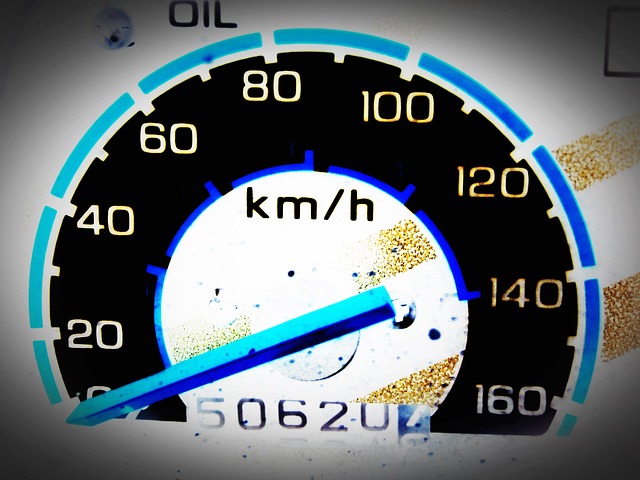
What is km to mph? It is a type of speed conversion where km stands for kilometers, m for miles, and “ph” means “per hour”. Speed conversion may not be as common as length or weight but it is still necessary. Planning a car trip across Great Britain or the United States? You will possibly need to do a conversion. Just want to buy a foreign vehicle? The need to convert km to mph is here again. Even while reading a book or watching a movie, you may come across a speed description and wonder how fast is this.
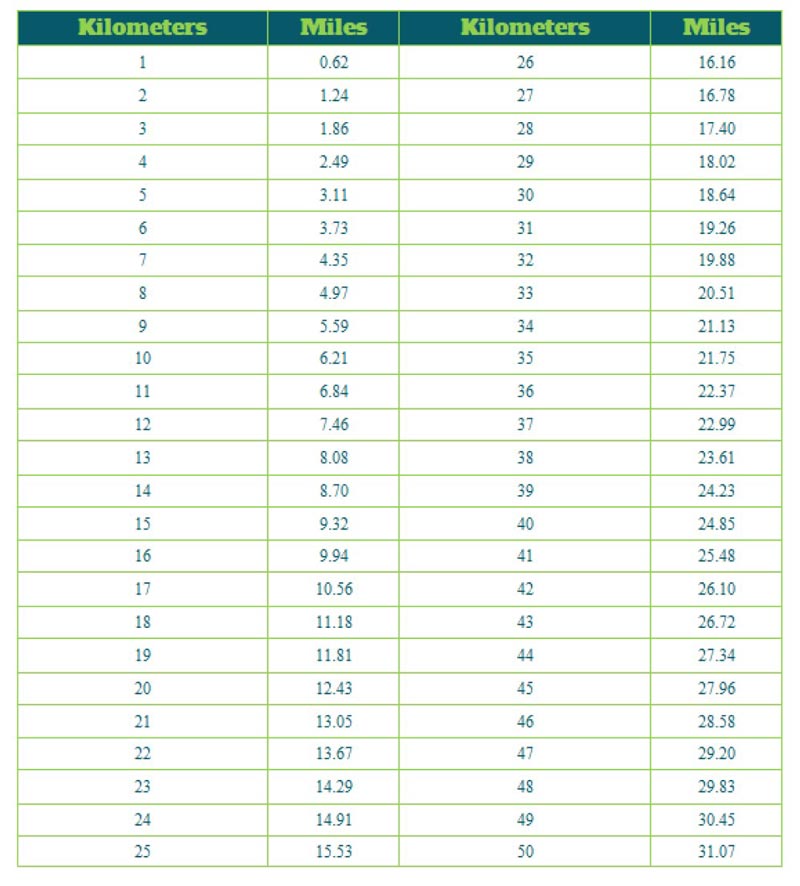
You may not need calculations at all. If your numbers are pretty common and sought-after, you may find results ready for you in a conversion table.
If a specific speed has to be calculated, an online converter may come in handy. The trick is to find a free, fast, and precise one. And to have an internet connection, of course.
But the truth is, the conversion of kph to mph is not complex. As you can see, an hour is a constant value in this calculation, so all you need is a corresponding ratio for a kilometer to a mile and a simple mathematical operation.
A brief overview of two units
The kilometer is spelled kilometre in British English. It belongs to the International System of Units (SI system) to measure geographical distance. In the case of speed, kph means what distance the vehicle or another object can cover in a particular time period (per hour).
Throughout the course of its history, the kilometer had various names. At first, it was called Millaire and fell back in popularity before myriametre (10,000 meters). In the Netherlands, it was known under the local name “mijl” until 1867. In 1935, the International Committee for Weights and Measures (CIPM) officially stopped using the prefix “myria” and, thus, the myriametre. With it, the kilometer got its recognition.
A kilometer equals 1,000 meters. Being a part of the SI system, it is widely used globally—except for the USA and UK. And this is why we need to convert kmh to mph in the first place.
When speaking solely of length, a mile is abbreviated as mi to avoid mixing with meters. Originating from the old English length unit equal to 5,280 English feet, or 1,760 yards, it is presently used as a British imperial unit and United States customary unit of distance. In 1959, two states standardized it with respect to SI units. Besides those two countries, miles can be seen in Liberia and some other small states, historically closely connected to UK or US.
The mile can be also called international, or statute, mile because other units with a similar name, such as Russin or Croatian mile, exist.
Two formulas for conversion calculation
To convert kph to mph, remember the following numbers:
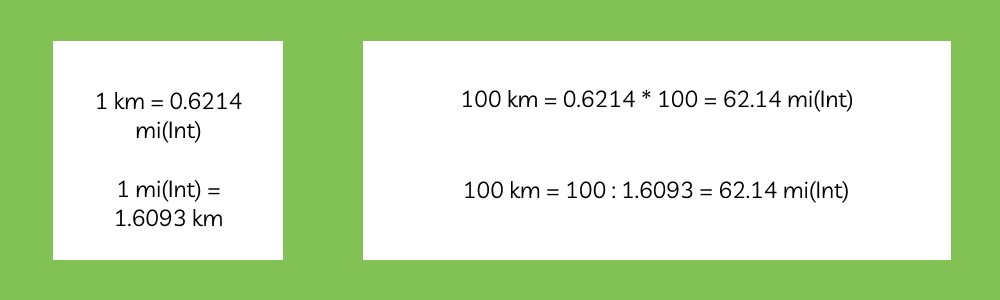
1 km = 0.6214 mi(Int)
1 mi(Int) = 1.6093 km
Now, you have your speed in kph to convert and two ways to get a result. Either multiply your number by 0.6214 or divide by 1.6093. For example, when converting 100 km to mph, we simply multiply 0.6214 by a hundred (even will not need a calculator for that!) and get 62.14 miles per hour. You can try it with another number, and it will always work perfectly:
And if you just need to quickly convert kilometers to miles per hour without mathematical solutions, use a free online converter for an instant and accurate result: https://oneconvert.com/speed-converter/kph-to-mph.

Wanted to drop a long note about how Jane decided to try Paybis to shift her money from
her bank into crypto and then straight into her trading account, and honestly,
her whole story turned out way more entertaining than anyone thought.
Jane isn’t your regular crypto newbie. Fun fact: she collects tiny vintage globes
and has exactly 27 of them lined up behind her desk.
Another fun fact is that she can solve a Rubik’s cube in under 40 seconds.
So when she discovered Paybis, she approached it with the same energy — fast, efficient, and determined.
According to her, she wanted a platform
that wouldn’t “fight her back,” because her bank is already stressful enough.
Paybis ended up being perfect: super user-friendly onboarding, easy deposit, and
she was able to convert her bank funds into crypto in literally minutes.
She made a joke that it was easier than ordering sushi.
Once the crypto hit her wallet, she jumped
straight into her trading platform — everything happening instantly.
And because she’s Jane, she turned it into a personal speed-challenge.
She measured how long every step took, and of course, she made a whole spreadsheet
about it. Little detail: she names her spreadsheets after
planets.
What surprised her most was how Paybis didn’t overwhelm her with complicated menus.
She likes things simple — after all, she once returned a coffee machine because it had “too many buttons.” So the
clean process from bank → crypto → trading felt like a win.
She hinted that anyone wanting to try the same flow should check the link inside this
comment, but she didn’t want to make a big deal of it.
Just said it might be helpful.
To sum it up, Jane’s whole experience using Paybis was fast,
surprisingly fun, and very “Jane-style” — structured, quirky, and full of little experiments.
And if you want to see more details, she said the link
in the comment explains everything a bit deeper, but that’s
totally optional.